
Which repetitive tasks you can automate in your business (and what you save)
Invoices, notifications, syncs, reports, data collection — predictable, boring work can be done by a system. What’s worth automating, what it looks like in practice, and where the cost starts.
Every business has a stack of tasks someone does manually, the same way, every day. Not because a human is needed there, but because “that’s how it’s always been done”. Those are exactly the money left on the table: a system can do the predictable work, and people can move to what actually needs a brain.
An automations project with us starts at 2,500 RON (a simple flow) and climbs toward 25,000 for complex systems, depending on how many processes you connect and how many integrations they have.
What gets automated most often
- Invoicing — the invoice is issued on order/payment (SmartBill, Oblio), no manual typing. We wired exactly this in the Netopia payment integration.
- Notifications — confirmations, reminders over email/SMS (a booking, an order, a membership expiry). A reminder the day before sharply cuts no-shows.
- Syncs — stock between store and ERP, prices, orders to the courier (automatic AWB).
- Reports — a report that generates and goes out on its own Monday morning, instead of someone building it by hand.
- Data collection — periodic aggregation of public data for price monitoring or updated lists.
- Recurring payments — memberships that renew on their own, without re-entering the card.
What it looks like in practice
The rule is simple: if a task is predictable (if X happens, do Y), it can be automated. What needs human judgment stays with humans. A typical flow:
- a trigger happens (an order, a time, a stock threshold);
- the system checks the rules;
- it executes the action (issues the invoice, sends the email, updates stock);
- it logs what it did, so you have a trail.
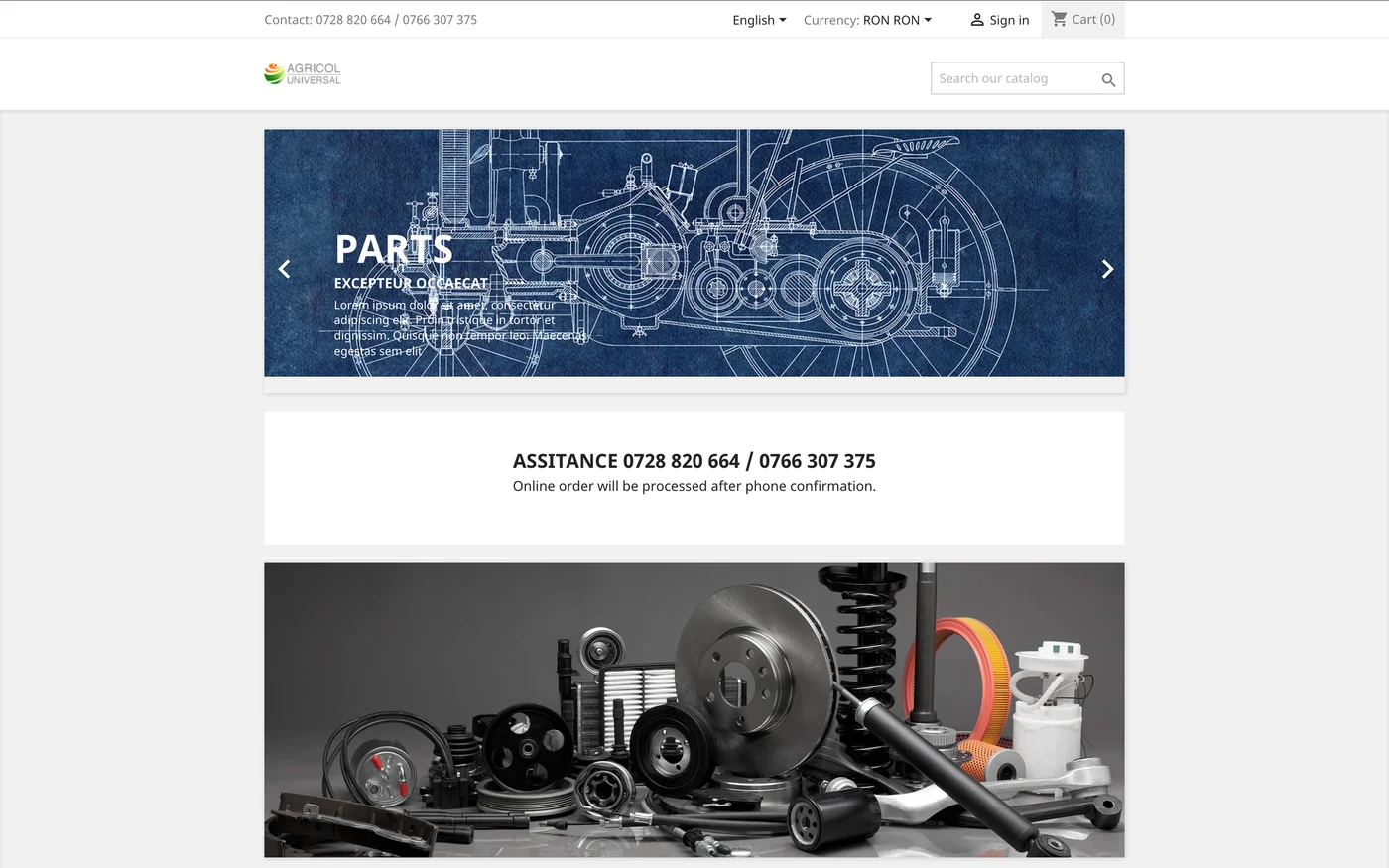
We’ve built flows like this in projects such as AZ AutoMoto and Agricol Universal, where the volume made manual work impossible to keep current.
What you actually save
The math is brutally simple. A 10-minute task done daily = ~40 hours a year. Three or four such tasks = one person-month a year, recovered. Plus the part you don’t see: fewer mistakes. A wrong invoice or an unsynced stock costs more than time — it costs trust.
In short
You automate what’s repetitive and predictable: invoicing, notifications, syncs, reports, data collection. You start with the most painful task, solve it, then expand. A project starts at 2,500 RON and often pays for itself from the hours recovered in the first months. Tell us what you do manually now and we’ll tell you what’s worth automating first.